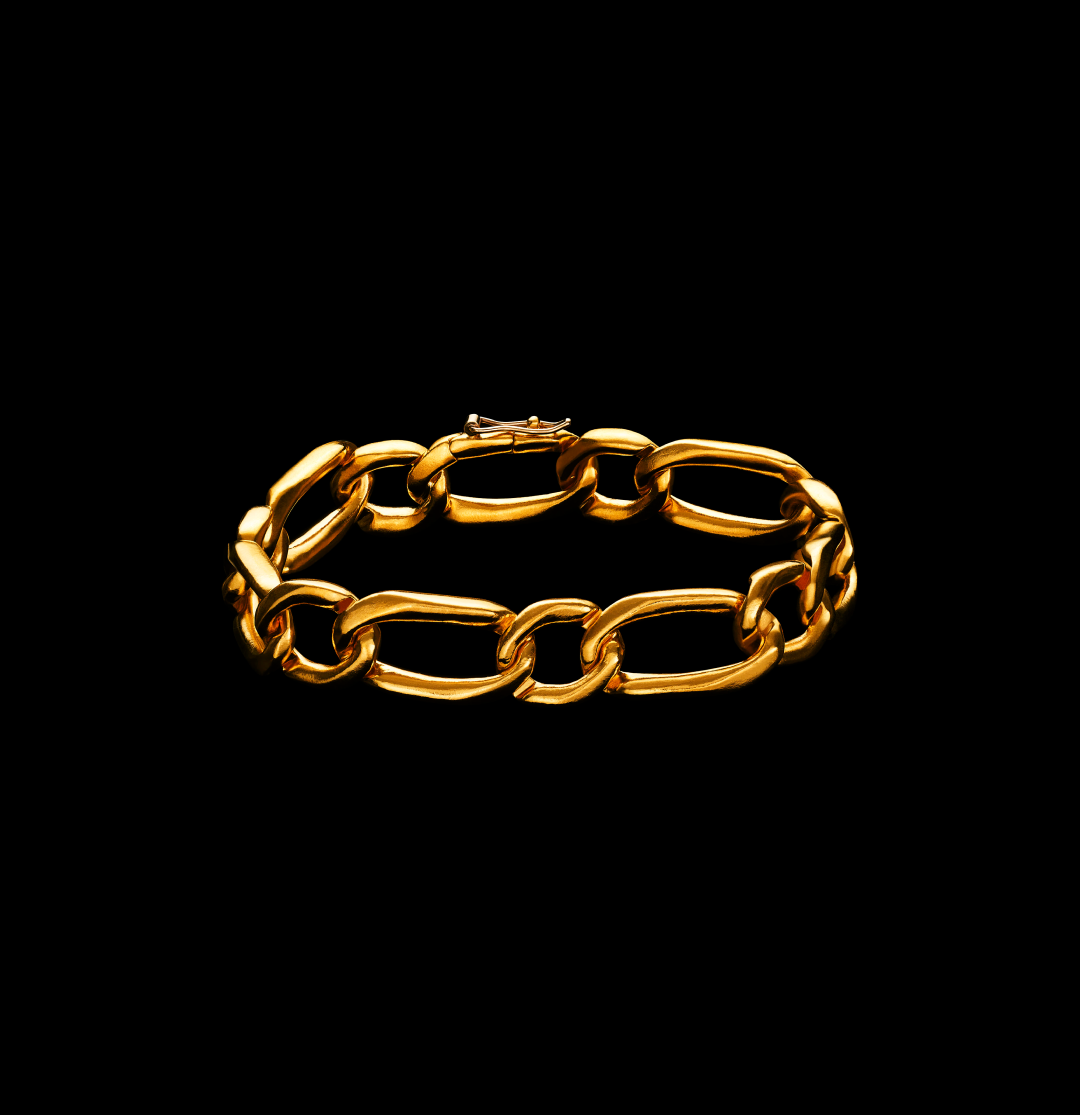
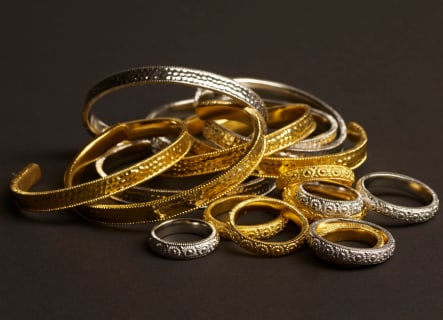
The Menē philosophy: pure precious metal in gold, platinum, and silver.
explore
Most jewelry brands work in 18k, 14k, or 10k gold alloys. Menē does not. Every piece in the Menē collection is crafted in pure 24k gold or pure platinum, with no plating, no alloy, and no surface treatment between the metal and the wearer. This commitment is not a styling choice or a marketing position. It is the foundation of what Menē is, and it shapes every decision the brand makes, from the materials used to the way pieces are priced.
This piece explains why Menē works exclusively in pure precious metal, what 24k gold offers that lower-karat alloys cannot, and how the choice reflects a broader philosophy about what fine jewelry should be. For wearers new to the brand, it is the most important context for understanding what makes a Menē piece distinct.
Pure 24k gold is gold at its highest purity, approximately 99.9 percent gold by content. The 24 karat marking indicates that 24 out of 24 parts of the piece are gold, with almost no other materials present. This is the highest purity standard used in jewelry, and it is the standard that has been used across most of the world's jewelry traditions for centuries.
By contrast, 18k gold contains 75 percent gold and 25 percent other metals. 14k gold contains 58.5 percent gold. 10k gold, the lowest karat that can legally be sold as gold jewelry in the United States, contains 41.7 percent gold. These lower-karat alloys are gold mixed with copper, silver, zinc, nickel, or palladium to give the piece additional strength, alter its color, or reduce its cost.
The distinction between pure gold and alloys is foundational. A piece marked 18k or 14k is not pure gold. It is gold mixed with other metals, and the qualities of the piece reflect that mixture. Pure 24k gold has its own distinct qualities, which are part of why Menē has built its collection around it.
Pure 24k gold offers several qualities that lower-karat alloys cannot match. Each of these qualities is part of why Menē chose to work exclusively in pure gold.
Color. Pure 24k gold has a deep, warm yellow tone that lower-karat alloys cannot replicate. As the karat decreases, the color shifts and becomes more muted, with copper, silver, and other alloy metals altering the underlying tone. The depth of pure gold is one of its most recognizable qualities, visible the moment a piece is held.
Chemical permanence. Pure 24k gold does not tarnish, oxidize, or corrode. The metal is classified as a noble metal, with an atomic structure that resists chemical reaction with air, water, and skin. A piece of pure gold worn fifty years ago carries the same color today as the day it was made. Lower-karat alloys can tarnish because of the other metals in the alloy, with white gold particularly prone to discoloration over time.
Hypoallergenic properties. Pure 24k gold is hypoallergenic by nature, as it contains almost no other metals that could trigger allergic reactions. Lower-karat alloys can contain nickel, copper, or other metals that commonly cause contact dermatitis. For wearers with sensitive skin, pure 24k gold is among the safest materials in jewelry.
Antimicrobial properties. Pure gold has been shown to inhibit bacterial growth, which is part of why gold has been used historically in medical and dental applications. For jewelry worn continuously against the skin, this antimicrobial quality adds another dimension to the case for pure gold.
Recognized value. A piece of pure 24k gold carries a recognized material value tied directly to the global market price of gold. The piece is, in part, a quantity of precious metal, with its underlying value visible in every gram. Lower-karat alloys hold proportionally less gold and correspondingly less material value.
The decision to work exclusively in pure 24k gold and pure platinum was made at the founding of Menē, and it reflects a broader philosophy about what jewelry should be.
Menē was founded on the principle that jewelry should be both beautiful and substantive. A piece of jewelry should be worn for its form, but it should also carry the recognized value of the material it is made from. Lower-karat alloys obscure this connection by mixing gold with other metals, which reduces the material content and makes the underlying value harder to verify. Pure 24k gold preserves the connection directly, with the metal itself carrying both the visual and the material qualities the piece is meant to embody.
The choice was also informed by the global tradition of high-purity gold. Across South Asia, the Middle East, and East Asia, pure or near-pure gold has been the standard for centuries. The Western shift toward lower-karat alloys, driven by industrial production and the demands of gemstone setting, was a relatively recent development in the long history of gold jewelry. By working in pure 24k gold, Menē connects to the older and more widely practiced tradition rather than the modern Western convention.
The third factor was price transparency. A pure 24k gold piece can be priced honestly in relation to the global spot price of gold, because the gram weight of the piece corresponds directly to a known quantity of pure metal. Lower-karat alloys complicate this calculation, since the gold content varies and the alloy metals carry different values. Pure gold supports the kind of pricing transparency that Menē was founded on.
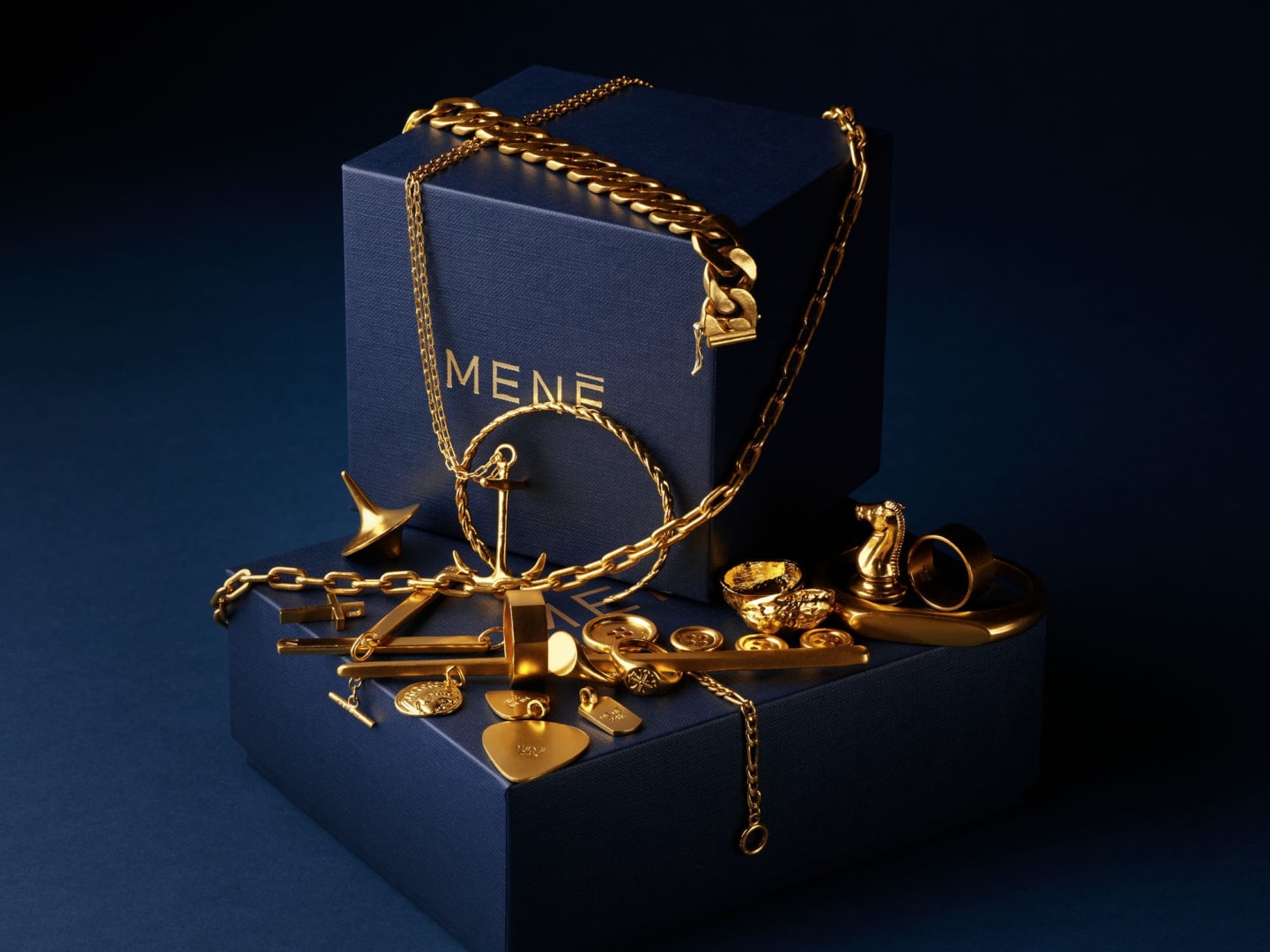
Pure 24k gold is softer than lower-karat alloys, which is one of the reasons Western jewelry has historically used alloyed gold for many forms. Menē addresses this practical consideration through several deliberate choices.
Substantial weight in core pieces. Many of the foundational pieces in the Menē collection, including the Classic Band, the Cuban Chain, and the Verona Cuff, are designed with substantial weight that compensates for the softness of pure gold. A heavier piece distributes wear more evenly and maintains its form across years of continuous use.
Considered design for everyday pieces. Pieces intended for daily wear are designed with the qualities of pure gold in mind. Smooth surfaces and rounded edges hold up better than sharp angles or fine detail in a soft metal, and the Menē collection reflects this throughout.
Care guidance. Menē provides clear care guidance with every piece, including recommendations to remove pieces during activities that could cause scratches or dents. This is part of how pure gold pieces are kept in good condition over decades of wear.
The case for symbolic softness. Pure 24k gold's softness is also part of why it has been chosen across cultures for pieces meant to be worn through significant life events. The metal shapes itself slightly to the wearer over time, developing a character that reflects the years of wear. This is not a flaw to be engineered away. It is part of what makes pure gold meaningful as a material.
Understanding why Menē uses pure 24k gold also requires understanding what the brand does not use, and why.
Plated jewelry. A plated piece is base metal with a thin layer of gold applied to the surface. The plating wears off with continued use, exposing the base metal beneath. Menē does not use plating because the material content of a plated piece is misleading and the piece does not hold up across the lifetime of wear that jewelry should support.
Gold-filled jewelry. Gold-filled pieces are similar to plated pieces but with a thicker bonded layer of gold. They are more durable than plated jewelry, but they remain primarily base metal with a gold exterior. Menē does not use gold-filled construction for the same reasons it does not use plating.
Lower-karat gold alloys. Menē does not work in 18k, 14k, or 10k gold. The choice reflects the brand's commitment to pure precious metal and the qualities that only pure gold offers.
Surface treatments and platings on platinum. Menē uses PT999 pure platinum without rhodium plating or other surface treatments. The metal carries its full character within the piece, without the need for treatments to enhance its appearance.
This is what Menē means by working only in pure precious metal. The materials are exactly what they appear to be, with nothing added to alter their character or obscure their content.
For wearers considering a Menē piece, the commitment to pure 24k gold and pure platinum has several practical implications.
The pieces hold their character across decades of wear, without tarnish, fade, or surface deterioration. There is no maintenance routine required to preserve the appearance of the metal, since pure gold does not change. The pieces are suitable for wearers with sensitive skin, including those with diagnosed metal allergies. The price of each piece reflects the gram weight of pure precious metal and the current global spot price, with a transparent Menē Fee covering the craftsmanship rather than an opaque retail markup.
For wearers building a collection, the commitment to pure precious metal also means that pieces from different categories work together seamlessly. A 24k gold ring layers with a 24k gold chain in the same metal. A pure platinum cuff pairs with a pure platinum band in the same metal. The consistency across the collection is part of how a Menē collection grows over time.
For wearers thinking about inheritance, the case is particularly strong. A piece of pure 24k gold passed from one generation to the next arrives intact, with its color and form unchanged from when it was first acquired. Pure precious metal is the material most suited to pieces meant to travel across generations.
Explore the Menē collection in 24k gold and pure platinum and discover pieces shaped from pure precious metal in its complete form.
LinkedIn: mene.com
Instagram: @mene
Facebook: @mene
X: @mene
Reddit: @mene24k
TikTok: @menejewelry
Pinterest: @mene24k