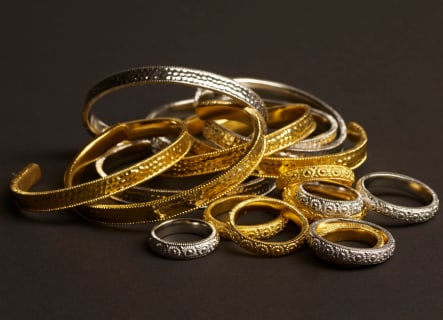
The Menē philosophy: pure precious metal in gold, platinum, and silver.
explore
In much of the world, 24k gold is the standard. In South Asia, the Middle East, and East Asia, pure 24k gold has been the foundation of fine jewelry for centuries, with bridal pieces, ceremonial gifts, and everyday wear all crafted from the purest form of the metal. In the West, the story is different. European and American jewelry markets have been dominated by 18k, 14k, and 10k gold alloys for generations, with pure 24k gold treated as an exception rather than a foundation.
This divergence is not accidental. The rarity of 24k gold in Western jewelry has historical roots, industrial drivers, and cultural patterns that have shaped the market for more than a century. This article examines why pure gold became uncommon in the West, what that meant for the kind of jewelry the West has produced, and what is changing as more Western buyers begin to consider pure gold for themselves.
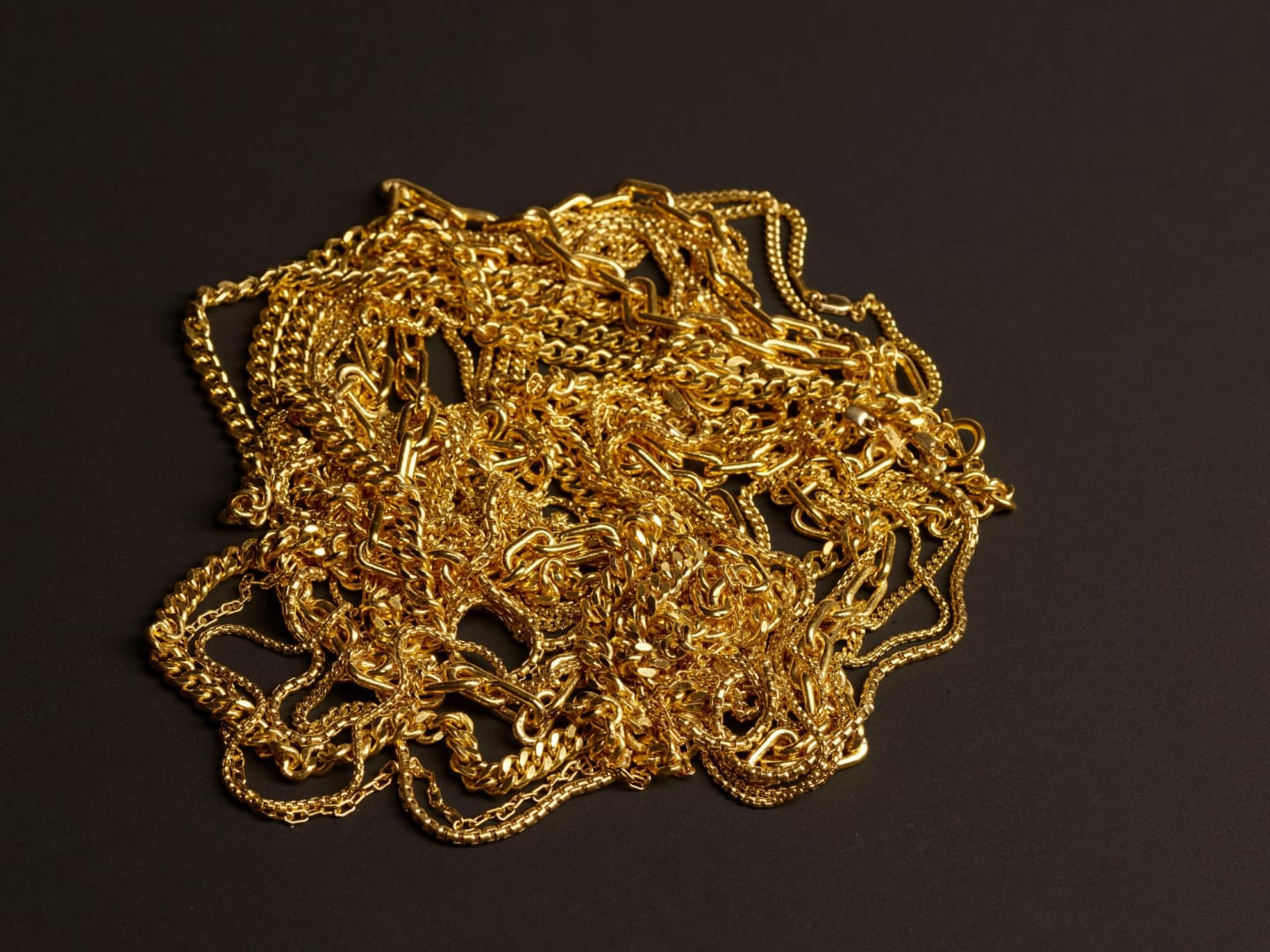
Across most of the world's major jewelry markets outside of Europe and North America, 24k or 22k gold is the standard. In India, gold jewelry is traditionally crafted in 22k, with 24k pieces also common in bridal and ceremonial contexts. In China, the standard for fine gold jewelry is approximately 99.9 percent pure gold, marked as 999 or 24k. In the Middle East, gold jewelry is most often sold in 21k or 22k, with 24k pieces widely available. In Southeast Asia, similar high-purity standards apply across Thailand, Vietnam, and Indonesia.
The reasons for this consistency across regions vary, but a common thread runs through them. In each of these cultures, gold jewelry is understood as both ornamental and as a recognized form of value. The piece is worn for its beauty and kept for its substance, with the purity of the metal directly tied to the substance held within the piece. Lower-karat alloys hold proportionally less gold and are therefore less suitable for jewelry intended to function in both registers.
This cultural understanding of gold jewelry as both adornment and substance has shaped the markets in these regions for centuries, with high-purity gold remaining the standard across generations of buyers.
In Europe and North America, the story took a different shape. While 24k and 22k gold were used in earlier centuries (and remain visible in certain antique pieces and royal regalia), the modern Western jewelry industry developed primarily around 18k, 14k, and 10k gold alloys. Several factors drove this shift.
The rise of industrial jewelry manufacturing. The nineteenth century saw the emergence of industrial jewelry production in Europe and North America, with techniques such as die-stamping, casting, and machine finishing allowing pieces to be produced at scale. Pure 24k gold is too soft to hold the fine detail of die-stamped pieces or to support the elaborate setting work that became fashionable during the Victorian and Edwardian periods. Alloying gold with copper, silver, and other metals produced a harder material more suited to industrial production.
The setting of gemstones. As Western fine jewelry developed an increasing emphasis on diamonds and colored gemstones, the metals used to hold those stones needed to be hard enough to grip the stones securely without bending or losing shape. Pure 24k gold is too soft for prong settings and many other fine setting techniques. The shift toward lower-karat alloys was, in part, a response to the requirements of gem-set jewelry.
Cost and accessibility. Lower-karat alloys contain less gold by weight, which makes them less expensive than pure gold pieces of the same size. As fine jewelry became more accessible to the rising middle class in Europe and North America during the nineteenth and twentieth centuries, lower-karat alloys allowed jewelers to produce pieces at price points that pure gold could not match.
Regulatory standardization. Government regulations in many Western countries set minimum purity standards for what could legally be sold as gold jewelry. In the United States, the minimum is 10k. In much of Europe, the most common standards are 18k and 14k. These regulatory frameworks reinforced the dominance of lower-karat alloys by giving them official standing as acceptable forms of gold jewelry.
The shift toward lower-karat alloys gave Western jewelry several advantages: durability, affordability, and suitability for industrial production. But the shift also represented a departure from several qualities of pure gold that other markets had continued to value.
The color of pure gold. Pure 24k gold has a deep, warm yellow tone that lower-karat alloys cannot replicate. As the karat decreases, the color shifts and becomes more muted. White gold, rose gold, and yellow gold alloys all carry colors that are notably different from pure gold, with the alloy metals (copper, silver, palladium) altering the underlying tone. Western jewelry developed its own aesthetic around these alloy colors, but the depth of pure gold was largely absent from Western fine jewelry for more than a century.
The chemical permanence. Pure 24k gold does not tarnish, oxidize, or corrode. Lower-karat alloys can tarnish because the other metals in the alloy are reactive. White gold in particular tends to develop a yellow cast over time, which is why it is often rhodium-plated to maintain its appearance. Pure gold avoids this issue entirely, but Western jewelry buyers became accustomed to maintenance practices (rhodium replating, polishing, cleaning) that pure gold does not require.
The hypoallergenic quality. Pure 24k gold is hypoallergenic by nature, as it contains almost no other metals that could trigger allergic reactions. Lower-karat alloys can contain nickel, copper, or other metals that commonly cause contact dermatitis. The shift toward alloys in the West introduced metal allergies as a common concern for jewelry buyers in a way that high-purity markets have largely avoided.
The recognized value. A piece of pure 24k gold carries a recognized value tied directly to the gram weight of pure gold it contains. Lower-karat alloys hold proportionally less gold, which means the material value of the piece is reduced accordingly. The traditional Western retail jewelry model, with its high markup multipliers, further obscured the relationship between the price paid and the underlying gold value.

While the West shifted toward alloys, other regions maintained their commitment to high-purity gold for reasons rooted in culture as much as in material.
In South Asian wedding traditions, the gold given to a bride is considered her own property and her own form of inheritance. The tradition of streedhan, which goes back thousands of years, treats wedding gold as a form of personal substance that the bride keeps regardless of circumstance. For this tradition to function, the gold must be high purity, since the material value is what makes the inheritance meaningful.
In Chinese tradition, gold given at major life occasions, including weddings, births, and milestone birthdays, is similarly understood as both a gift and a form of substance to be kept. The Chinese standard of 99.9 percent pure gold reflects this dual purpose, with the piece chosen for both its beauty and its underlying material value.
In Middle Eastern markets, gold has long served as a form of family wealth that travels easily across borders and generations. High-purity gold maintains its value across all of these movements, which is part of why the standard has remained high across the region.
These cultural patterns have kept high-purity gold central to jewelry markets that the West largely moved away from, and they help explain why the global picture is less uniform than Western buyers often assume.
In recent years, pure 24k gold has begun to find a place in Western markets again, though it remains far less common than in other regions. Several factors are driving this shift.
Greater awareness of metal purity. Western buyers are increasingly aware of the distinction between pure gold and lower-karat alloys, with growing interest in the qualities that pure gold offers (color, permanence, hypoallergenic nature, material value).
The influence of global culture. As Western markets have become more globally connected, the standards of South Asian, East Asian, and Middle Eastern jewelry have become more visible and more influential. Buyers exposed to high-purity gold through travel, family, or cultural connections often develop a preference for it.
Changing approaches to luxury. A growing number of Western buyers are looking for luxury that is grounded in material and craftsmanship rather than in branding alone. Pure 24k gold offers both, with the material itself carrying the substance that branding alone cannot.
New jewelry brands focused on pure gold. A small number of brands have built their identity around pure 24k gold specifically, offering Western markets an alternative to the lower-karat alloys that have dominated for generations. These brands are part of why pure gold is becoming more visible to Western buyers who would not have encountered it through traditional retail jewelry.
Menē is built around the principle that pure 24k gold and pure platinum are the materials most suited to fine jewelry. Every piece in the collection is crafted in these two metals, with no plating, no alloy, and no surface treatment between the material and the wearer.
The decision to work exclusively in pure precious metal is part of what makes Menē distinct in the Western market. While most fine jewelry in Europe and North America continues to use 18k, 14k, and 10k alloys, Menē offers Western buyers access to the same pure gold tradition that has remained central to jewelry across the rest of the world.
Explore the Menē collection in 24k gold and pure platinum and discover pieces shaped from precious metals at their highest purity.
LinkedIn: mene.com
Instagram: @mene
Facebook: @mene
X: @mene
Reddit: @mene24k
TikTok: @menejewelry
Pinterest: @mene24k