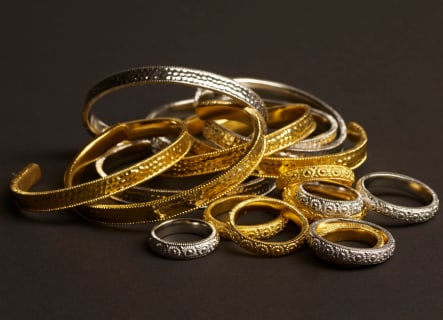
The Menē philosophy: pure precious metal in gold, platinum, and silver.
explore
The price of a piece of fine jewelry is shaped by several factors, but for pieces made from pure precious metal, the most important factor is one that almost no one ever sees: the daily spot price of the metal. Set every day on global markets, the spot price determines the underlying value of the gold or platinum in a piece and forms the foundation of what the piece is worth.
For most jewelry buyers, the spot price is invisible. Traditional luxury jewelry brands set their prices based on retail markup conventions rather than on the underlying metal value, which means the connection between the spot price and the price paid is obscured. For brands built on price transparency, the spot price is the visible foundation of every piece's price. This guide walks through how the spot price works, how it is determined, and what it means for the buyer.

The spot price is the current market price for one ounce of a precious metal, settled for immediate delivery. It is the foundational price that determines what any given quantity of pure gold or pure platinum is worth at a specific moment in time.
Spot prices move continuously throughout each trading day, with global markets in London, New York, Hong Kong, and Zurich all contributing to price discovery as buyers and sellers transact across time zones. The price reflects the balance of supply and demand at any given moment, with shifts in either direction moving the price up or down.
For pure precious metals, the spot price is the most important number in the market. Coins, bars, jewelry, and industrial materials are all valued in relation to it. A piece of jewelry that contains a known weight of pure 24k gold can be valued at any moment by multiplying the gram weight by the current spot price per gram.
The spot price of gold and platinum is determined by global market activity, but several specific mechanisms shape the price each day.
The London fix. Twice a day for gold (and once a day for platinum), a group of major banks participate in a price-setting process administered by the London Bullion Market Association. These auctions, known as the LBMA Gold Price and LBMA Platinum Price, produce a benchmark price used widely across the industry. The morning gold fix occurs at 10:30 GMT, with an afternoon fix at 15:00 GMT.
Continuous trading. Outside of the fix periods, gold and platinum trade continuously across global markets. Major exchanges include the New York Mercantile Exchange (COMEX), the Shanghai Gold Exchange, and the Tokyo Commodity Exchange. The price moves throughout the day in response to economic news, currency movements, and supply-and-demand shifts.
Supply and demand factors. The longer-term direction of the spot price reflects supply factors (mining output, recycled metal, central bank sales) and demand factors (jewelry consumption, industrial use, investment demand). Major events such as central bank policy changes, geopolitical instability, or shifts in the global economy can move prices significantly.
For platinum specifically, additional factors apply. Approximately three-quarters of global platinum supply comes from South Africa and Russia, which means political or economic disruptions in either country can have outsized effects on the price. Industrial demand from the automotive industry (for catalytic converters) also has a significant influence on platinum prices.
For a piece of jewelry made from pure precious metal, the spot price translates to a price per gram, which can then be multiplied by the gram weight of the piece to determine the metal value.
For example, if the spot price of gold is $2,500 per ounce, that translates to approximately $80 per gram (with one troy ounce equal to approximately 31.1 grams). A piece of jewelry containing 50 grams of pure 24k gold would have a metal value of approximately $4,000 at that spot price.
This calculation gives the foundational metal value of a piece, but the final price typically includes additional costs. These can include the cost of crafting the piece (design, casting, finishing, setting), the cost of any documentation or certification, and a margin for the brand that produced it. The way these additional costs are presented varies significantly across brands and is one of the clearest indicators of how a brand approaches pricing.
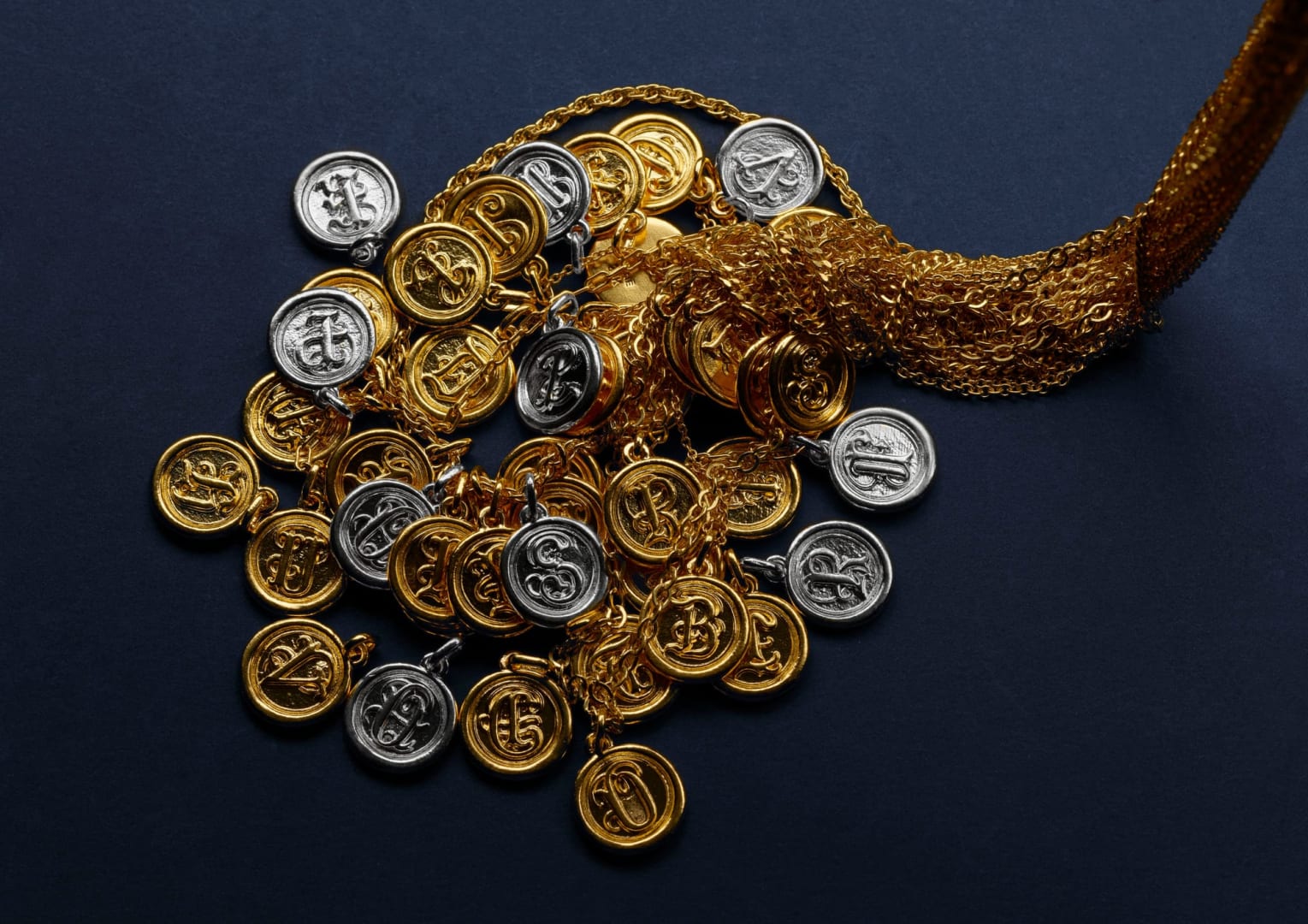
The traditional luxury jewelry industry has historically used a markup-based pricing model. Under this model, a brand calculates the cost of materials and production, then applies a multiplier (often 8x to 10x for the highest-end brands) to arrive at the retail price. The customer pays the marked-up price without seeing the underlying material cost or the size of the markup.
This model has several effects. It allows brands to set prices based on perceived value rather than on the cost of the materials and work. It obscures the connection between the price paid and the underlying value of the piece. And it means that the customer is paying significantly more than the material value, with the difference going to the brand's marketing, distribution, and margin.
The alternative model, sometimes called transparent pricing or cost-plus pricing, works differently. Under this model, the brand publishes the cost of the materials (typically the gram weight of the precious metal multiplied by the current spot price), the cost of the work (a transparent fee for the craftsmanship), and the final price as the sum of those components. The customer sees exactly what they are paying for, and the connection between the underlying metal value and the price paid is visible.
For pieces made from pure precious metal, transparent pricing is the more honest model. The metal value is the foundation of the piece, and presenting it openly allows the customer to make an informed decision about what they are buying.
Because the spot price changes daily, the price of a pure precious metal piece changes daily as well under a transparent pricing model. A piece that costs $4,500 on a day when the gold spot price is $2,500 per ounce might cost $4,700 the following week if the spot price has risen to $2,650.
This may seem like a complication, but it reflects a genuine quality of pieces made from pure precious metal. The piece is, in part, a quantity of precious metal, and its value moves with the value of that metal. When the metal market rises, the piece becomes more valuable. When the market falls, the piece becomes less expensive to acquire.
Traditional retail jewelry obscures this connection by setting prices that remain static even as the underlying metal value moves. The customer pays the same price whether gold is at $1,500 per ounce or $3,000 per ounce, with the brand absorbing the difference (and benefiting on the upside). Transparent pricing passes the movement directly to the customer.
For buyers acquiring pieces during periods of lower spot prices, the connection works in their favor. The piece acquired at a lower spot price contains the same gram weight of precious metal as the same piece acquired at a higher spot price, but at a lower total cost. As the spot price rises, the material value of the piece rises with it.
The spot price determines the underlying metal value of a piece, but it does not tell the whole story. Several factors that affect the final price of a piece are not captured by the spot price alone.
Purity of the metal. A piece made from 18k gold contains 75 percent pure gold, which means its metal value is 75 percent of what a comparable 24k piece would carry. The spot price applies to pure gold, and lower-purity alloys carry proportionally less metal value.
Craftsmanship. The work of designing, casting, finishing, and detailing a piece is independent of the spot price. A simple band and a complex sculptural piece of the same weight contain the same metal value but require very different amounts of work to produce. The craftsmanship is what distinguishes the piece beyond its material.
Brand and provenance. Some brands command premiums based on heritage, design, or marketing. These premiums are layered on top of the metal value and the craftsmanship cost, and they vary significantly across brands.
Plating and surface treatment. Plated jewelry contains very little precious metal by weight, which means the spot price is largely irrelevant to its value. The marked price of a plated piece reflects the base metal, the thin layer of plating, and the brand's margin, but not a meaningful quantity of precious metal.
Every Menē piece is priced according to three components: the gram weight of the pure 24k gold or pure platinum, the current global spot price of the metal, and a transparent Menē Fee that covers the design, craftsmanship, and finishing of the piece.
The price moves with the daily spot price, which means the buyer pays the genuine market value of the metal at the moment of purchase. There is no inflated retail markup, no opaque pricing model, and no disconnect between the material in the piece and the price paid for it. The model is built around the principle that pieces made from pure precious metal should be priced honestly in relation to the metal they contain.
Explore the Menē collection in 24k gold and pure platinum and discover pieces shaped from pure precious metal and priced with full transparency.