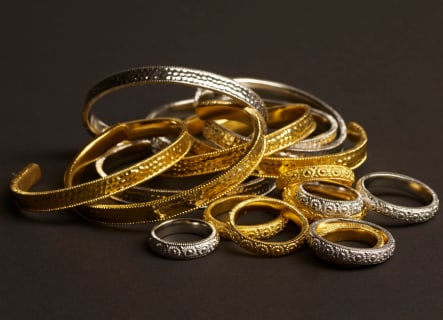
The Menē philosophy: pure precious metal in gold, platinum, and silver.
explore

A hallmark is the most concise piece of writing on a piece of jewelry. Stamped in a space rarely larger than two millimeters, it tells the wearer what the piece is made of, how pure the metal is, and in many cases, where the piece was made. Understanding what these markings mean is the foundation of building a jewelry collection with intention.
This guide walks through the system of hallmarks used on gold and platinum jewelry, the standards of purity each marking represents, and how to distinguish pure precious metal from the alternatives. It is written for both new collectors learning to read jewelry stamps for the first time and experienced wearers refining their understanding of what they already own.
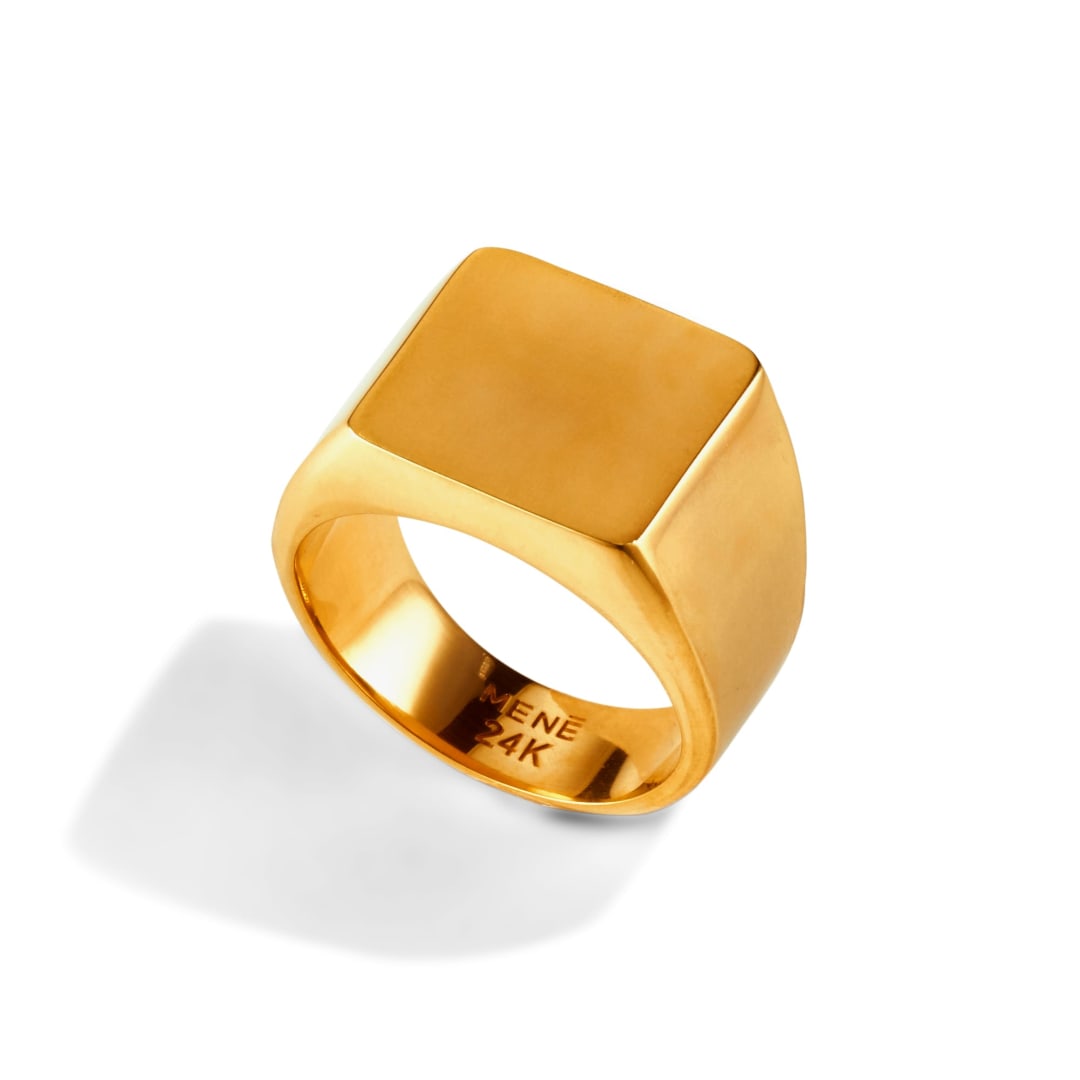
A hallmark is a small stamped marking applied to a piece of jewelry to indicate the precious metal content of the piece. The marking specifies the type of metal, the purity of the metal, and sometimes additional information such as the maker's mark or the country of origin.
The practice of hallmarking dates back more than seven centuries. The earliest formal hallmarking system was established in England in 1300 by King Edward I, who introduced the standard as a measure to protect buyers from fraudulent precious metal. The original London Assay Office, established at Goldsmiths' Hall, gave the practice its name. Since then, hallmarking has spread across nearly every major jewelry-producing region, with each developing its own conventions while sharing the same fundamental purpose.
Today, hallmarks remain the primary way buyers can verify the precious metal content of a piece without specialized testing. A clear, well-applied hallmark is itself a sign of a piece made with care.
Gold purity is measured using the karat system, which divides gold into 24 parts. The number of parts that are pure gold determines the karat marking. A piece marked 24k contains 24 parts gold out of 24, or approximately 99.9 percent pure gold. As the number decreases, the proportion of pure gold in the piece decreases correspondingly.
The most common gold purity markings are:
The numeric markings (999, 916, 750, 585, 417) follow the millesimal system, which expresses purity in parts per thousand. This system is used widely in Europe and has become increasingly standard internationally.
Lower-karat gold contains other metals mixed with the gold to add strength or alter color. These additional metals can include copper, silver, zinc, nickel, or palladium. The lower the karat, the higher the proportion of these other metals, and the more the piece's characteristics depart from those of pure gold.
Platinum is hallmarked differently from gold, with markings that reflect the metal's distinct characteristics. The standard platinum purity markings are:
Unlike gold, where lower-purity alloys are widely used and visually similar to pure metal, platinum tends to be sold in higher purities across the board. The cool tone, density, and finish of platinum read consistently across these purity levels, but the highest-quality pieces are made in PT999, where the metal carries its full character within the piece.
A separate category of hallmarks signals that a piece is not solid precious metal. Recognizing these markings is essential, particularly for any wearer building a collection intended to be worn continuously or kept across generations.
A stamp such as 18K GP does not mean the piece is 18k gold. It means the piece is plated with 18k gold over a base metal. The distinction is critical for understanding what the piece actually is. Over time, plated and filled pieces lose their surface as the gold layer wears, exposing the base metal beneath.
The purity of the precious metal in a piece of jewelry determines several qualities that affect how the piece is worn, how it ages, and how it holds its value over time.
Color and finish. Pure 24k gold has a deep, warm yellow tone that lower-karat alloys cannot replicate. As the karat decreases, the color shifts and becomes more muted, with white gold and rose gold representing the most pronounced departures from pure gold's natural tone. Pure platinum carries a cool, luminous tone that holds consistently across the lifetime of the piece.
Chemical permanence. Pure 24k gold and pure platinum do not tarnish, oxidize, or corrode. Both are classified as noble metals, with atomic structures that resist chemical reaction with air, water, and skin. Lower-karat alloys can tarnish because of the other metals mixed into them, and plated pieces lose their gold layer entirely with continued wear.
Hypoallergenic properties. Pure 24k gold and pure platinum are hypoallergenic by nature, as they do not release the ions that trigger allergic reactions in sensitive skin. Lower-karat alloys can contain nickel, copper, and other metals that commonly cause contact dermatitis.
Value. Pure precious metals carry their full material value within the piece, tied directly to the global market price of the metal. Lower-karat alloys hold proportionally less precious metal and correspondingly less material value. Plated pieces contain very little precious metal by weight.
Reading the hallmark is the first step in verifying the purity of a piece, but it is not the only one. A complete evaluation considers several factors together.
The hallmark itself. A clear, well-applied hallmark consistent with the piece's stated purity is the first indicator of authenticity. Sharp, complete stamps are characteristic of pieces made with care.
The weight. Pure precious metals are denser than alloys and feel heavier in the hand for their size. A piece that feels lighter than expected for its dimensions may not be solid precious metal.
The color. Pure 24k gold has a depth of warmth that lower-karat alloys cannot match. Pure platinum has a cool luminosity distinct from white gold or silver.
The documentation. A piece accompanied by a certificate of appraisal or other documentation from the maker provides a permanent record of the metal content. For pieces without documentation, professional testing such as XRF analysis can verify the metal content without damaging the piece.
Every Menē piece is crafted in 24k gold or pure platinum, the two highest purity standards used in fine jewelry. Pieces in gold carry the 24k hallmark, and pieces in platinum carry the PT999 hallmark. There is no plating, no surface treatment, and no alloy diluting the metal in any Menē piece.
The price of each piece reflects the gram weight of the metal and the current global market price, with a transparent margin rather than a traditional retail markup. This pricing model is built around the same principle as the hallmark itself, which is to give the wearer clear, verifiable information about what the piece is made of.
Explore the Menē collection in 24k gold and pure platinum and discover pieces shaped from precious metals at their highest purity.