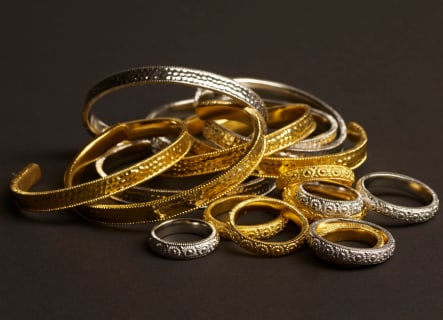
The Menē philosophy: pure precious metal in gold, platinum, and silver.
explore

On the scale and on the hand, platinum is felt before it is seen. The weight of pure platinum is among the most defining qualities of the metal, sensed before the eye registers anything else.
A piece in pure platinum carries a presence that begins the moment it is held. The density of the metal gives every form a sense of intention, every ring its place on the finger, every cuff its weight on the wrist. The wearer is reminded of the piece not through visual prominence but through its quiet substantiality, a quality that has long set platinum apart from every other metal used in fine jewelry.
Density is a measure of how much mass is contained within a given volume. The denser a metal, the more weight it packs into the same amount of space, which is why a small object made of a dense metal can feel surprisingly heavy in the hand.
Pure platinum has a density of approximately 21.45 grams per cubic centimeter. Pure gold has a density of approximately 19.32 grams per cubic centimeter. Both are among the densest metals used in jewelry, but platinum sits at the top of that range, approximately 11 percent denser than gold.
That difference, small in measurement but consistent in every piece, is what gives pure platinum the substantial presence it carries on the body.
Platinum has been known to humans for centuries, but its use in fine jewelry is relatively recent. The metal was first encountered by European explorers in South America in the 1500s, where Indigenous communities had been working with it for generations. For most of the time since, however, platinum remained largely outside the world of fine jewelry. The reason was practical. Platinum's melting point is approximately 1,768 degrees Celsius, several hundred degrees higher than gold's. Without the technology to reach that temperature reliably, the metal could not be cast, shaped, or finished in the ways jewelry-making required.
That changed in the late nineteenth century, when advances in metallurgy and the development of the oxyhydrogen torch made it possible to work platinum at scale. By the early twentieth century, platinum had entered the world of fine jewelry, where its cool tone, density, and resistance to wear made it well suited to pieces that combined precision with permanence. The Art Deco movement of the 1920s and 1930s embraced platinum particularly closely, and the metal has held its place in fine jewelry ever since.
Today, platinum is most often used for pieces that benefit from its substantial weight and consistent character: wedding bands, engagement rings, and pieces designed to be worn for a lifetime.

The weight of pure platinum is not a measurement read on a scale. It is a quality felt every time a piece is worn.
A platinum ring sits more deliberately on the finger than a piece of the same form in a lighter material. A platinum cuff rests with intention on the wrist rather than shifting freely. A platinum chain settles closer to the body, with its own weight giving it a more grounded presence at the neckline.
This is part of why pure platinum is often chosen for pieces meant to be felt as well as seen. The wearer is reminded of the piece throughout the day, not through visual prominence but through its quiet substantiality. The density gives platinum a tactile depth that no other metal in jewelry can match.
For brides and grooms choosing a wedding band, this is one of the most resonant reasons to consider platinum. The weight of pure platinum on the hand becomes part of the ongoing experience of the ring, present in every gesture and every glance down at the band.
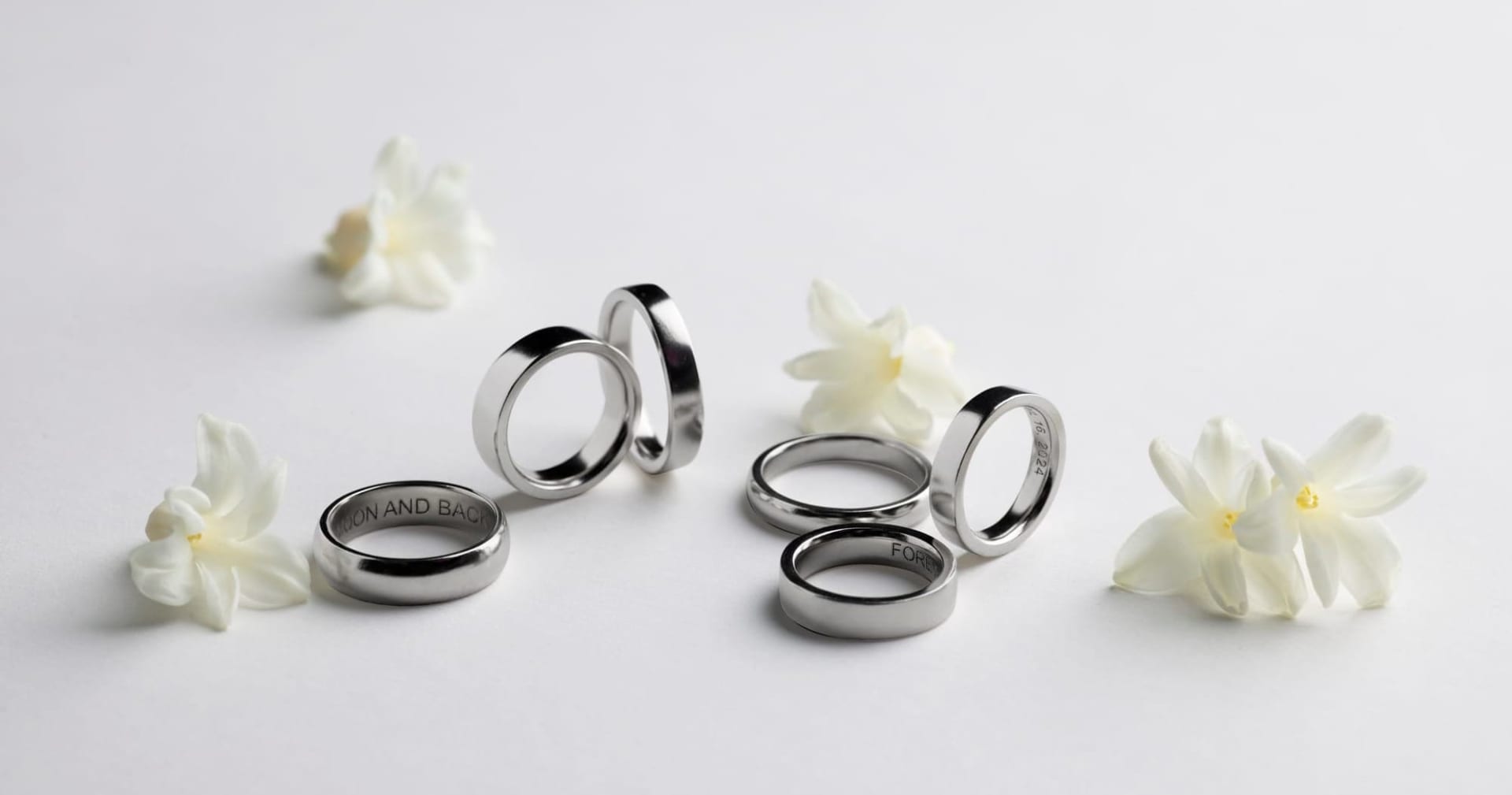
Like gold, platinum is a precious metal priced by gram weight and traded on global markets. The value of any piece of pure platinum jewelry is therefore tied directly to the spot price of the metal, which fluctuates daily based on supply, demand, and broader market conditions.
That connection has been particularly meaningful for platinum in recent years. The metal opened 2018 trading around $900 per ounce and dipped below $600 during the pandemic in 2020, before beginning a sustained recovery. By 2024, platinum had returned to above $1,000 per ounce, and prices have climbed considerably since, recently trading above $2,000 per ounce.
This appreciation reflects something specific to platinum. Unlike most luxury goods, which depreciate the moment they are acquired, a piece of pure platinum jewelry holds value in the metal itself. The weight of the piece is not only what makes it feel substantial on the body. It is also what determines what the piece is worth.
Menē pieces are crafted in PT999, or pure platinum, which contains 99.9 percent platinum and almost no other materials. The full density of the metal is preserved in every piece, with no plating, no surface treatment, and no alloy to lighten its weight or alter its character.
The price of each piece reflects the gram weight of platinum and the current global market price, with a transparent Menē Fee. The combination of pure metal, gram-weight pricing, and that transparency gives a Menē platinum piece a clarity unique in the fine jewelry industry. The wearer holds a piece that is substantial in the hand, beautiful in form, and tied directly to the global market for the metal itself.
Discover the Menē collection in pure platinum.
Yes. Pure platinum is approximately 11 percent denser than pure gold, with a density of 21.45 grams per cubic centimeter compared to 19.32 for gold. This means that two pieces of identical size will weigh more in platinum, and the difference is felt in the hand.
Platinum feels heavier because its atoms are packed more tightly together, allowing the metal to hold more mass within the same volume. The result is a substantial presence on the body that is felt every time the piece is worn.
Pure platinum has a density of 21.45 grams per cubic centimeter. A piece of pure platinum jewelry of a given size will be approximately 11 percent heavier than the same piece in pure gold, which is felt the moment the piece is held.
Pure platinum has a density of 21.45 grams per cubic centimeter and pure gold has a density of 19.32 grams per cubic centimeter. The difference makes platinum approximately 11 percent denser, despite the two metals appearing similar in size.
Pure platinum is often chosen for jewelry because of its density, durability, and consistency. The metal carries a substantial weight on the body, holds its character through years of wear, and retains a value tied directly to the global market for platinum.