The Menē philosophy: pure precious metal in gold, platinum, and silver.
explore
Pure silver vs. pure platinum is a comparison of brightness and depth, lightness and density, everyday versatility and long-term precious-metal value.
The simplest answer: choose pure silver when you want luminous, sculptural jewelry at a more accessible price point. Choose pure platinum when you want greater density, resistance to tarnish and jewelry whose value is directly connected to its precious-metal weight. Both can belong in the same collection; they simply serve different purposes.
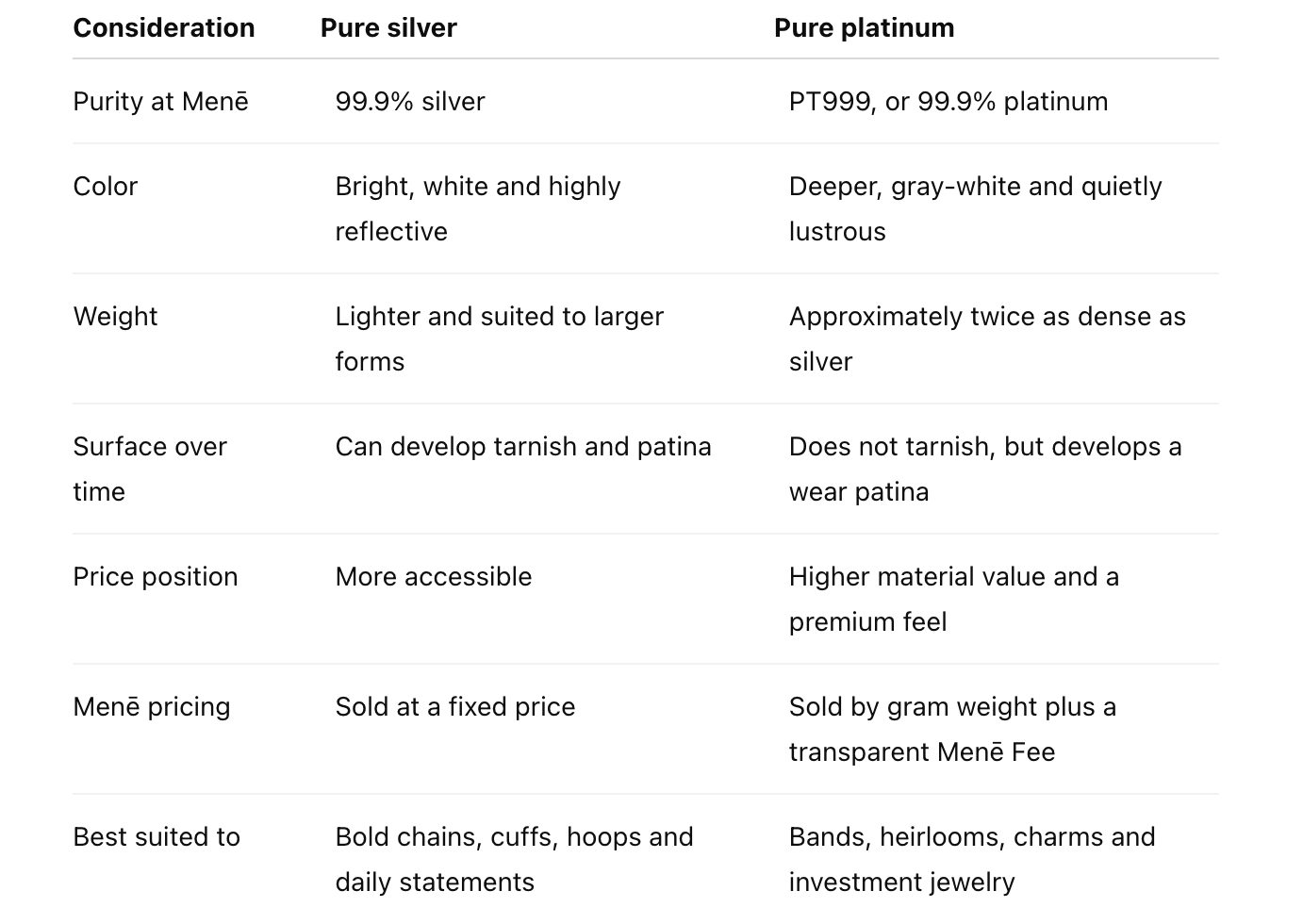
Both metals are offered by Menē at 99.9% purity. Menē pure silver is AG999 silver rather than sterling silver, while Menē pure platinum is PT999.
Pure silver, also known as fine silver, contains approximately 99.9% silver. It is typically identified by a 999 hallmark, distinguishing it from sterling silver, which contains 92.5% silver and 7.5% other metals.
Its defining visual quality is luminosity. Pure silver has the whitest color and highest optical reflectivity of any metal, giving jewelry a bright, clean appearance.
At Menē, pure silver is used for sculptural pieces designed for frequent wear. Its relative softness allows it to take on substantial, architectural forms, from the Interlock Ring to the Cuban Chain.
For readers more familiar with conventional silver jewelry, it is important to understand that pure silver and sterling silver are not interchangeable. Sterling is an alloy created partly to make silver harder and easier to mass-produce. Pure silver preserves the character and silver content of the metal in a more complete form.
Pure platinum at Menē is PT999, meaning it contains 99.9% platinum. It has a cool tone like silver, but its appearance is deeper and more subdued. Rather than flashing brightly, platinum has a dense, gray-white luminosity associated with quiet luxury.
The difference is also tactile. Platinum has a density of approximately 21.5 grams per cubic centimeter, compared with approximately 10.5 for silver. Two similarly sized pieces will therefore feel dramatically different: platinum sits with noticeable weight, while silver allows a larger silhouette to remain comparatively light.
Platinum is highly resistant to tarnish and well suited to jewelry intended for long-term wear. This makes it a natural choice for pieces with lasting personal significance, including a Classic Band, signature chain or meaningful charm.
Choose pure silver for a brighter, whiter finish. It creates clear contrast against the skin and gives bold links, smooth cuffs and polished hoops an immediate presence.
Choose pure platinum for a darker, richer cool tone. Its luster is quieter, making it ideal for minimal designs, discreet daily jewelry and pieces where weight matters as much as shine.
Silver is not a substitute for platinum. Let silver provide light and scale while platinum provides depth and substance. Silver can also be worn everyday. A metal that you live with.
The choice may also depend on the other pieces in your collection. Pure silver works naturally with crisp white metals and high-contrast styling. Platinum can appear more restrained beside a watch, wedding band or other jewelry designed to be worn continuously.
Pure platinum is the stronger choice for buyers prioritizing resistance to tarnish and a substantial piece for long-term wear. It may acquire fine scratches and a natural surface patina, but it does not tarnish in the way silver may.
Pure silver is softer and its surface will evolve. Contact with air, moisture, skin oils and certain chemicals may create a slight patina. Because the piece is pure silver throughout rather than plated, it can be gently cleaned and refreshed without revealing a different base metal underneath.
Platinum suits those wanting less routine care; silver suits those who appreciate a surface that becomes more personal with wear.
This does not mean pure silver is unsuitable for everyday jewelry. It means the owner should expect the piece to gather character rather than remain visually unchanged. Jewelry should also be removed before activities that could expose either metal to unnecessary impact, abrasion or harsh chemicals.
Pure silver’s lower density makes it well suited to visually substantial jewelry. A wide cuff, bold chain or large hoop can deliver presence without the same weight the form would carry in platinum.
The Cuban Chain Bracelet, for example, uses broad sculptural links in a metal suited to everyday statement dressing.
Platinum is ideal for wearers who enjoy feeling the weight of precious metal. A platinum ring sits deliberately on the finger, while a platinum chain settles closely against the body. That substantiality is one of platinum’s defining luxuries.
There is no universally more comfortable option. Someone who prefers barely noticeable jewelry may favor silver, particularly in larger designs. Someone who associates weight with quality and presence may prefer platinum.
Price is one of the clearest distinctions in the pure silver vs. pure platinum decision.
Pure silver offers an accessible way to own jewelry made from pure precious metal. At Menē, silver pieces are sold at fixed prices rather than by gram weight, and is not investment jewelry. They are not included in the same Buyback program as eligible 24k gold and pure platinum pieces.
This positions silver as artisan-crafted precious-metal jewelry intended primarily to be worn, enjoyed and collected.
Pure platinum occupies a different position. Menē platinum jewelry is priced according to its gram weight, the prevailing market value of platinum and a transparent Menē Fee. Eligible pieces can be tracked through the Menē Digital Vault and sold or exchanged through the Buyback program at their precious-metal value, less the applicable fee.
Choose silver when design, scale and everyday wear are your priorities. Choose platinum when you also want the jewelry’s price and ongoing value to remain visibly connected to the underlying metal.
Start with pure silver when you want to explore Menē’s pure-metal philosophy through a bold everyday design. The Classic Hoop Earrings, Interlock Ring or a sculptural silver chain can introduce the brightness of pure metal at a lower starting price.
Start with pure platinum when you want a foundational heirloom, wedding band or piece connected directly to precious-metal value. Platinum is particularly compelling for a design you intend to wear continuously and eventually pass on.
Existing collectors can combine both: silver for larger, expressive silhouettes and platinum for concentrated weight and lasting material value.
A collector might begin with a pure silver chain or cuff and later add a platinum band, charm or pendant. Alternatively, someone who already owns platinum investment jewelry can introduce pure silver to explore greater scale without replicating the cost or weight of a comparable platinum design.
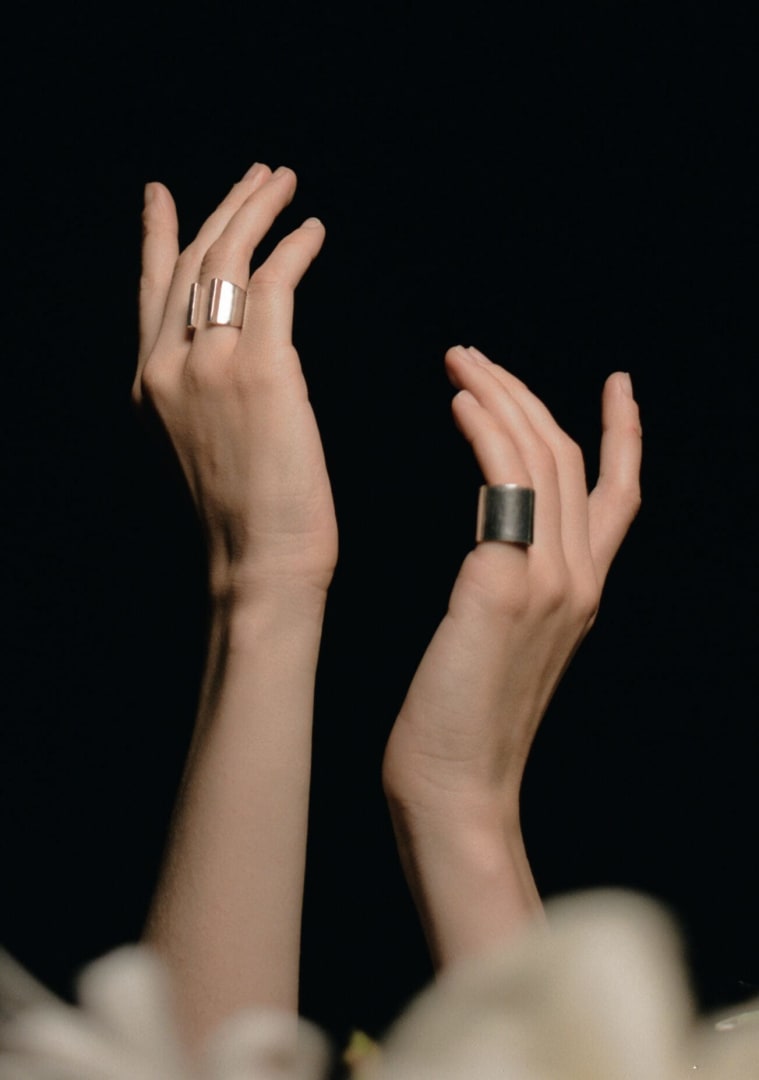
Yes. Their shared cool palette makes silver and platinum easy to combine, while the contrast in brightness keeps the composition intentional.
Try pairing a luminous silver chain with a smaller platinum pendant, stacking a sculptural silver ring beside a platinum band, or wearing silver hoops with a platinum chain. Repeating one design language, such as Cuban links, smooth bands or clean geometric forms, will help the metals feel connected.
For a more restrained composition, allow one metal to lead. A bold silver piece can provide the focal point while platinum acts as a quieter accent. Platinum can also take the central role, with silver adding brightness around it.
In the comparison of pure silver vs. pure platinum, neither metal is universally better.
Pure silver is the choice for brightness, versatility, sculptural scale and a more accessible introduction to pure precious metal. Pure platinum is the choice for density, resistance to tarnish, quiet prestige and jewelry with transparent, weight-based precious-metal value.
The right collection may include both: silver for the pieces that animate daily life, and platinum for the pieces that anchor it.
Explore Menē Pure Silver or discover the Pure Platinum collection.
Pure silver is better for bright, sculptural jewelry at a more accessible price. Platinum is better for buyers prioritizing density, tarnish resistance and weight-based precious-metal value.
Yes. Pure silver can develop patina through exposure to air, moisture, skin oils and chemicals. It generally patinas more gradually than sterling silver because it contains no alloys.
Pure platinum does not tarnish like silver. Its surface can develop fine scratches and a soft patina through wear, but the metal retains its naturally cool color.
Yes. Platinum is approximately twice as dense as silver, so two pieces of the same size will feel substantially different in weight.
Both pure silver and pure platinum are generally suitable for many people with metal sensitivities because they contain no alloy material.
No. Menē pure silver is sold at a fixed price and is not included in the Menē Buyback program, and is not investment jewelry.
LinkedIn: mene.com
Instagram: @mene
Facebook: @mene
X: @mene
Reddit: @mene24k
TikTok: @menejewelry
Pinterest: @mene24k