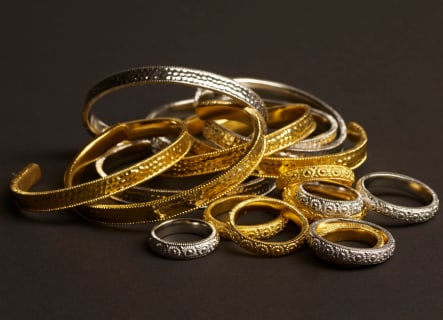
The Menē philosophy: pure precious metal in gold, platinum, and silver.
explore
A lasting jewelry collection is not built all at once. It is shaped over time through a series of decisions about what to acquire, what to wear, and what to keep.
Rather than focusing on trends or volume, building a collection comes down to selecting pieces that can be worn consistently and hold their relevance over time. Pieces made from 24k gold and pure platinum often become the foundation of a collection due to their purity and permanence.
A jewelry collection often begins with a small number of foundational pieces that can be worn across different settings.
Chains, rings, and bracelets designed for everyday wear tend to form the base of a collection. These pieces are versatile, can be layered or worn alone, and transition easily between occasions.
For those starting a jewelry collection, simple and well-proportioned designs are often the most practical place to begin. Exploring a curated selection of essential jewelry pieces can provide a clear starting point for building a collection over time.

The material a piece is made from plays a defining role in how it wears over time. Gold and platinum are both precious metals, but they differ in composition, appearance, and how they respond to regular use. Understanding these differences helps inform which material is best suited to how a piece will be worn and how it will evolve as part of a collection.
The difference between gold and gold-plated jewelry is that 24k gold (also referred to as pure gold) is made entirely of gold, while gold-plated jewelry consists of a base metal, such as brass, copper, or stainless steel, coated with a thin layer of gold.
Plated jewelry relies on a surface layer that can wear down with regular use, exposing the material underneath. Pure gold does not have this limitation, allowing it to be worn consistently over time while maintaining its deep, unmistakable color.
This distinction directly impacts durability and longevity. Solid gold is typically selected for pieces intended for regular wear, while gold-plated jewelry is more suited to occasional use.
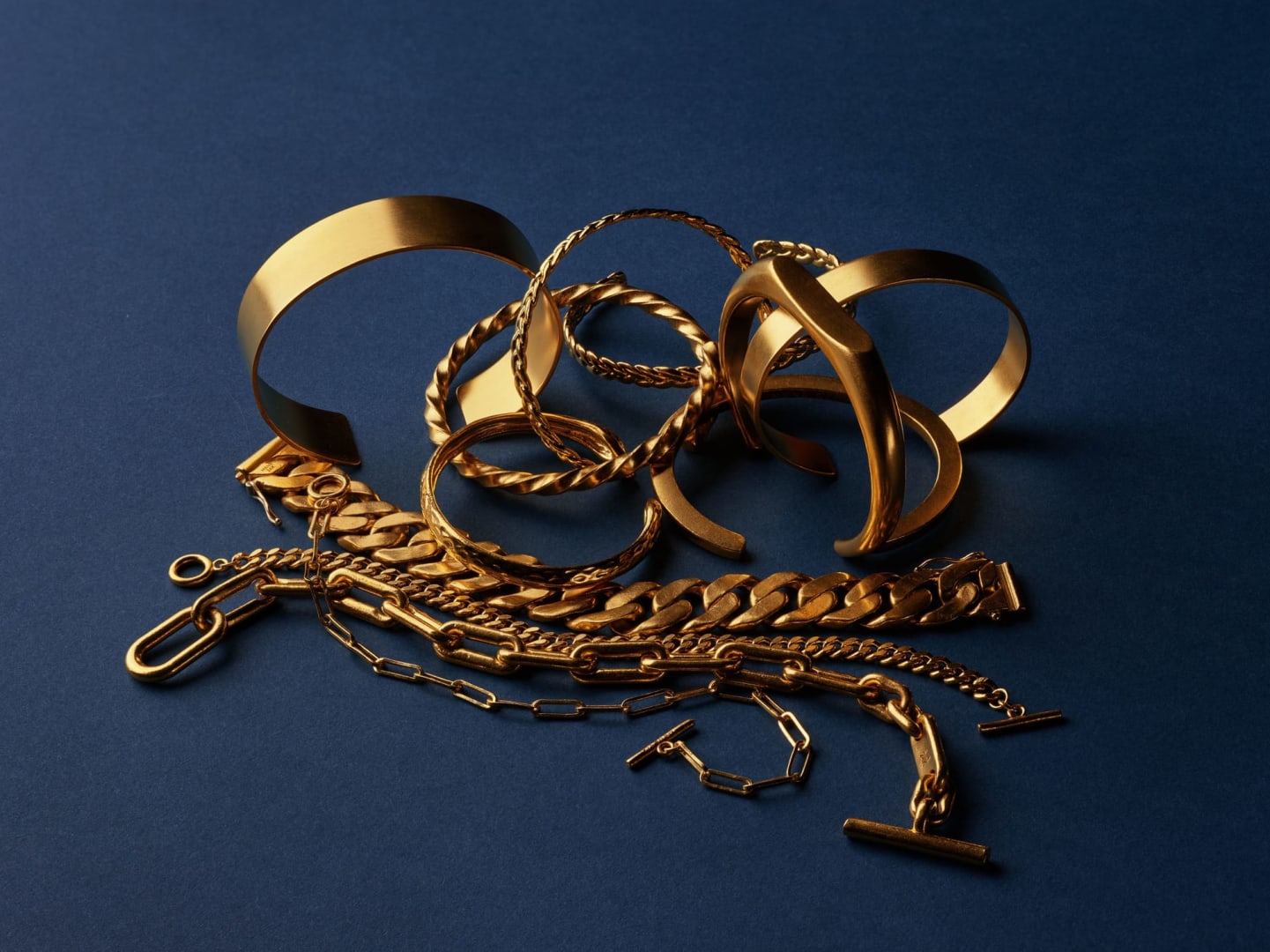
When comparing platinum vs gold jewelry, the differences come down to structure, appearance, and long-term wear.
Platinum is denser and more rigid, which allows it to maintain its shape under regular use. Gold, particularly in higher purities, is more malleable. Rather than holding a fixed form, it can adjust slightly with wear, allowing the piece to settle more naturally against the body over time.
There is also a clear visual difference. Gold has a warmer tone, while platinum is naturally a cooler tone and luminous. This often influences how each metal complements different skin tones and how it pairs with other pieces in a collection.
Pricing is determined differently as well. Gold jewelry is typically priced based on weight and purity (karat), while platinum jewelry is often priced at a higher per-gram cost due to its density and relative rarity.
The choice between gold and platinum depends on a combination of factors, including visual preference, how the piece will be worn, and how it fits within a collection over time. Considerations such as material behaviour, care, and long-term value often play a role in determining which metal is the better fit.
As a collection develops, the focus shifts from individual pieces to how those pieces work together.
Variation becomes important. Differences in length, weight, and scale allow pieces to be combined in multiple ways, creating flexibility in how jewelry is worn across different settings.
Layering and stacking plays a central role. Chains of different lengths, paired with bracelets or rings of varying presence, allow a collection to be adjusted without introducing entirely new pieces.
A mix of lighter and heavier designs adds another level of range. Lighter pieces can be worn on their own for a more understated look, while heavier pieces create more structure and can anchor a layered combination.
Over time, new pieces are added based on how they complement what is already in the collection. This allows each addition to integrate naturally, rather than feeling separate or out of place.

Menē pieces are made from 24k gold and pure platinum, without plating or dilution. The metal itself forms the foundation of each piece.
Pricing is based on weight and the current market price of gold or platinum, rather than traditional retail markups. This ties the cost of each piece directly to the metal it contains.
The designs are timeless, created to last beyond trends and seasonal moments. Developed under the direction of Diana Picasso and Sunjoo Moon, pieces are made to be worn consistently, kept over time, and built into a collection that remains relevant year after year.
Explore the essential categories:
Each category is available in both 24k gold and pure platinum.